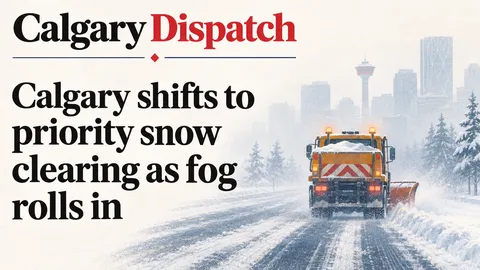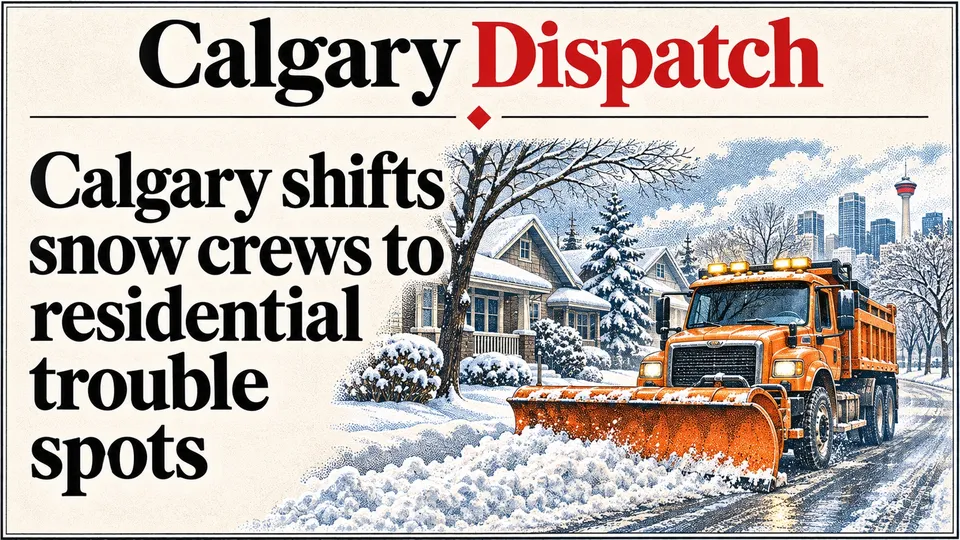
Calgary road crews have completed clearing the city's priority-two routes following this week's snowfall, according to a municipal update issued at 6:30 a.m. Friday, November 20. The city says preliminary work on major routes and major community and transit corridors is complete, allowing equipment and crews to shift toward lower-volume routes and trouble spots. That is a new operational milestone compared with the earlier storm-response updates.
The next phase includes finishing work on turn lanes and highway ramps within the city's responsibility, tending to designated feeder and collector routes, and clearing priority bus stops. Residential roadways will be monitored for rutting and hazards, with plowing or application of material as necessary. The city cautions that routine full snow removal from every residential street is not part of its service standard.
Calgary's priority-one network covers heavily travelled roads, downtown streets and cycle tracks, while priority-two work concentrates on major community and transit routes and key intersections. The city says its approach is staged so the highest-traffic corridors receive service first. Completion of a priority class does not guarantee dry pavement at every intersection or that conditions cannot deteriorate with changing weather.
The city's priority plan also distinguishes local jurisdiction from provincial responsibility. Snow and ice maintenance on Deerfoot Trail, Stoney Trail and Tsuut'ina Trail is managed by Alberta rather than Calgary's municipal crews. Drivers reporting trouble spots or trying to identify who is responsible should keep that distinction in mind.
The Friday update says parking is permitted on snow routes, indicating no current snow-route parking ban in that notice. However, parking arrangements and operational status can change if further snowfall occurs. The city's live snow and ice page remains the appropriate reference for current instructions.
For residents, the shift in work does not end winter-driving precautions. The meaningful change is the move from priority corridor clearing to localized maintenance after the initial response. Any future collision totals, emergency warnings or new snow-route restrictions would require a separate verified update; none is asserted in this report.