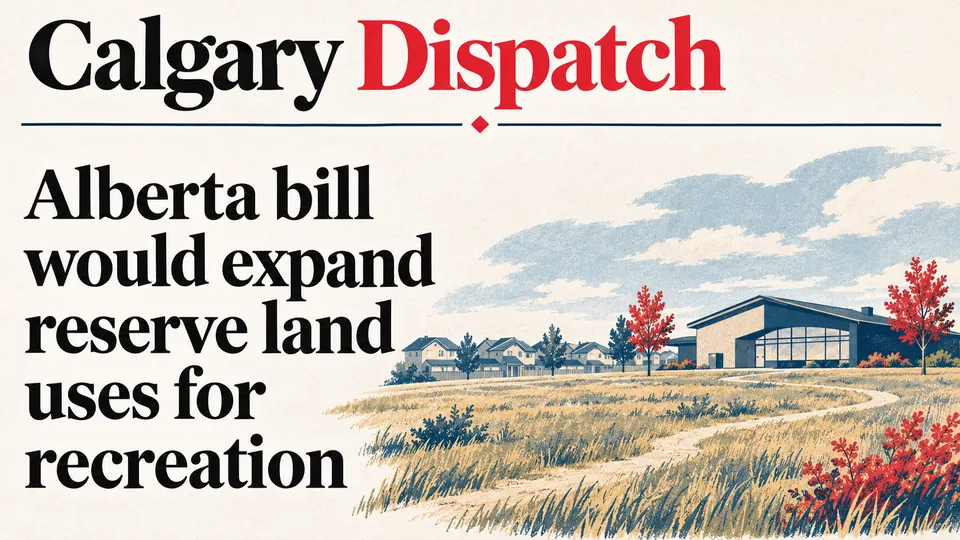
EDMONTON — Alberta legislators have introduced a private member’s bill that could broaden the types of non-profit recreational facilities allowed on certain municipal reserve lands. Bill 215, the Municipal Government (Reserve Land Use) Amendment Act, 2026, received first reading Wednesday, November 18, according to the Legislative Assembly’s official record. The proposal has not passed second or third reading and is not law.
The measure, sponsored by MLA Tany Yao, would amend the Municipal Government Act’s treatment of community services reserve land. A plain-language analysis published by the legislative tracker Parledex says the amendment would add non-profit community recreation facilities to the list of permitted uses and broaden the relevant definition of non-profit organizations. Community services reserve land is already available for a range of community purposes, including facilities such as libraries and affordable housing.
The potential Calgary relevance is straightforward: recreation associations and facility operators face pressure to find land and affordable space while population growth increases demand for ice, fields and other indoor amenities. A clearer ability to use qualifying reserve sites could widen the range of options available to municipalities and non-profit groups. That does not mean a new arena, fieldhouse or community centre has been approved, or that any particular Calgary parcel would be made available.
Any proposed change also raises land-use trade-offs. Reserve designations exist to support community needs, and residents may have competing expectations about how that land should be used. The effect of the bill will turn on its exact definitions, municipal discretion and the safeguards governing the allocation of land. No Calgary project or funding commitment accompanies the first-reading record.
A useful next step for Calgary is to ask its recreation and planning departments, together with local sports associations, whether any projects would qualify under the proposal and whether existing land-use rules have actually prevented such facilities. The Legislature’s record establishes introduction; its practical consequences remain questions for debate and consultation.