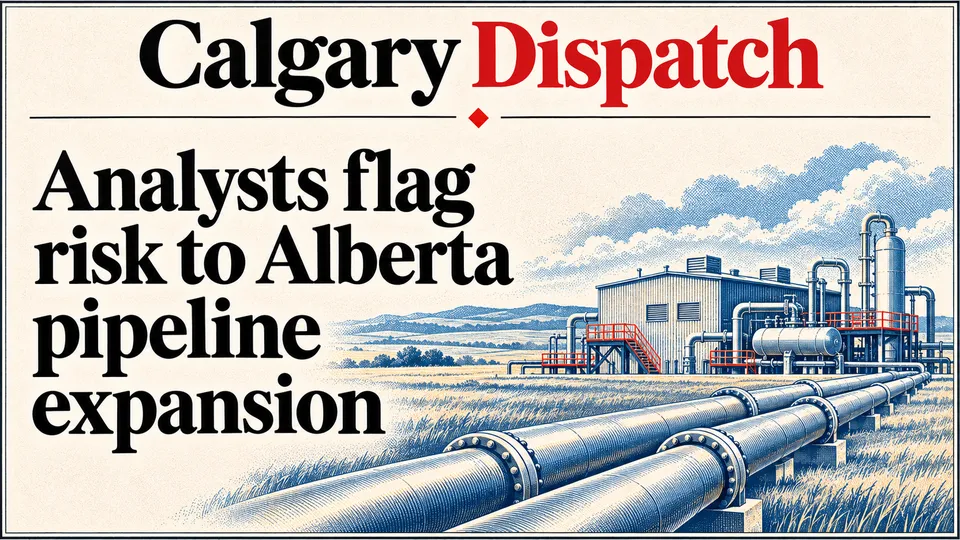
Financial analysts are warning that Alberta's proposed expansion of provincial authority over natural gas infrastructure could complicate future investments by Calgary-based TC Energy. In an assessment reported Tuesday, November 24, by the Canadian Press, CIBC Capital Markets analysts Robert Catellier and Rogan Anantharajah identified uncertainty surrounding the timing and economics of future expansions to the NOVA Gas Transmission system.
Their assessment follows the introduction of Alberta's proposed Natural Gas Infrastructure Act on Monday. Bill 45 would allow Alberta to establish provincial entities capable of participating in natural gas pipeline planning and development. The government has argued that additional transmission infrastructure is necessary to accommodate potential demand from oilsands producers, electricity generation, petrochemical operations and artificial intelligence data centres.
Provincial officials have characterized direct government participation as a possible alternative if private-sector expansion fails to meet anticipated requirements. No specific publicly owned pipeline has been approved. TC Energy announced November 16 that it was pursuing the next phase of expansion on its NGTL network, including the proposed Alberta Growth Connector.
The approximately 370-kilometre pipeline would transport natural gas toward Alberta's oilsands region. The company anticipates that demand on its network could increase from 14.4 billion cubic feet per day in 2026 to approximately 18 billion by 2031. More than 60 per cent of that projected increase is associated with Alberta's oilsands, power generation and data-centre sectors.
CIBC's analysts identified a potential jurisdictional complication because NGTL is federally regulated and extends beyond Alberta. Their assessment nevertheless distinguishes possible difficulties securing future growth from a more fundamental threat to the existing transmission business. The analysts consider the immediate risk primarily one of uncertainty rather than evidence that the proposed legislation has already undermined TC Energy's operations or cancelled its expansion plans.
Canadian Utilities, part of the ATCO group, has also confirmed it is reviewing the legislation. The company emphasized the importance of efficient infrastructure investment and the existing integration of natural gas transmission assets. TC Energy previously warned the provincial government that disrupting the integrated NGTL–ATCO arrangements could create difficulties for its proposed offering of more than 1.3 billion cubic feet per day of additional transportation capacity.
The latest assessments highlight a tension between Alberta's desire to accelerate industrial development and the need for private infrastructure investors to establish predictable commercial and regulatory conditions. Building pipeline capacity ahead of confirmed demand could help attract new projects, but it also raises questions about who bears the cost if anticipated industrial developments do not proceed.
The allocation of construction and utilization risks would depend on the financing and regulatory arrangements ultimately adopted. Bill 45 remains before the legislature. For Calgary's energy sector, the next important developments will include the final scope of the legislation, any agreements protecting existing integrated transmission arrangements and confirmation of whether TC Energy proceeds with its planned transportation offerings.
The latest analyst commentary adds an independent financial perspective to the dispute, but it does not establish that any pipeline development has been cancelled or that public investment is inevitable.