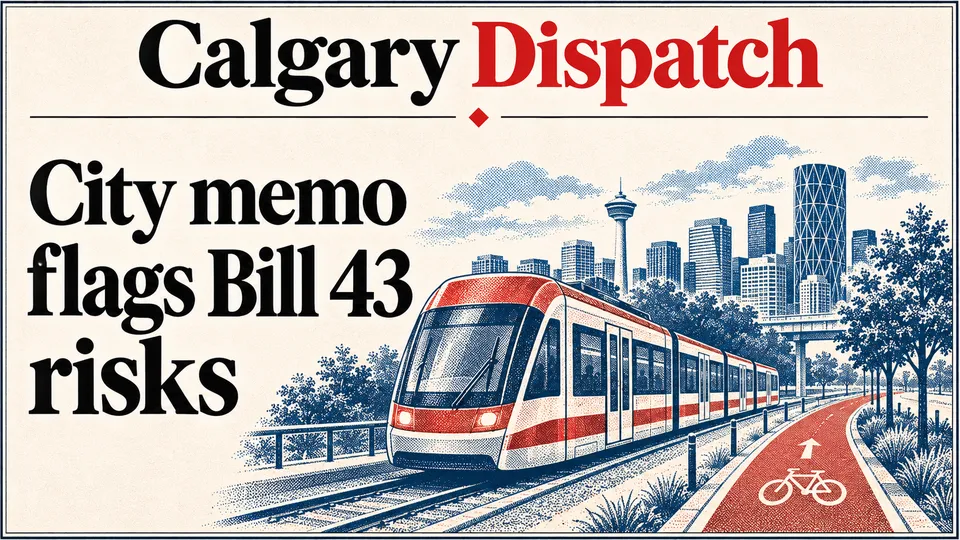
An internal City of Calgary memorandum has identified substantial financial and construction risks associated with Alberta's proposed transportation legislation, raising new concerns about the province's planned expansion of authority over municipal infrastructure. The five-page assessment, dated November 20 and obtained and published Tuesday by LiveWire Calgary, examines how Bill 43 could affect urban rail projects, cycling infrastructure and personal mobility devices. Municipal officials classify several of the potential consequences as high risk, particularly those affecting Calgary's rail transit network.
The memorandum, prepared by the city's government relations department for councillors and senior administrators, identifies a potential imbalance between provincial decision-making authority and municipal financial responsibility. Under the city's interpretation of the proposed legislation, Alberta could direct modifications to transit projects that are already approved or under construction while Calgary remains responsible for implementation expenses. The assessment also identifies the proposed ability of provincial cabinet to alter existing rail funding arrangements as an additional source of uncertainty.
One of the most significant findings concerns Calgary's existing cycling infrastructure. Municipal officials warn that provincial approval requirements could become part of routine road resurfacing and renewal projects where bicycle lanes are present. Consequently, the legislation could affect existing infrastructure even when Calgary is not proposing a new cycling route. The assessment identifies potential expenses involving redesign, removal, road restoration and investments in infrastructure that subsequently becomes unusable.
The city's analysis also recommends examining whether future transportation budgets require larger financial contingencies to accommodate provincial decisions. That concern is particularly relevant while Calgary council considers its proposed 2027–2030 budget. Major construction projects are vulnerable to cost increases when designs change after procurement or construction has begun. However, the memorandum does not establish a specific new financial liability for the Green Line or predict a confirmed construction delay.
Alberta Transportation and Economic Corridors Minister Devin Dreeshen has presented Bill 43 as a measure to improve coordination between governments, protect road capacity and ensure major infrastructure investments deliver value to taxpayers. The province argues that its substantial financial contributions to urban rail projects justify greater involvement in their planning. Premier Danielle Smith has also indicated that amendments are forthcoming following discussions with Calgary Mayor Jeromy Farkas, particularly concerning responsibility for bike-lane removal expenses.
The newly available municipal assessment adds greater detail to concerns previously expressed by Farkas. Rather than focusing exclusively on the potential removal of individual cycling routes, it identifies broader implications for long-term infrastructure planning and financial management. Bill 43 remains proposed legislation, and the city's analysis reflects the version introduced November 19. The next significant development will be the publication of formal amendments establishing whether Calgary's concerns over rail-project costs, funding agreements and existing infrastructure will be addressed.
Sources: LiveWire Calgary: City of Calgary memo coverage · Government of Alberta: Bill 43 announcement