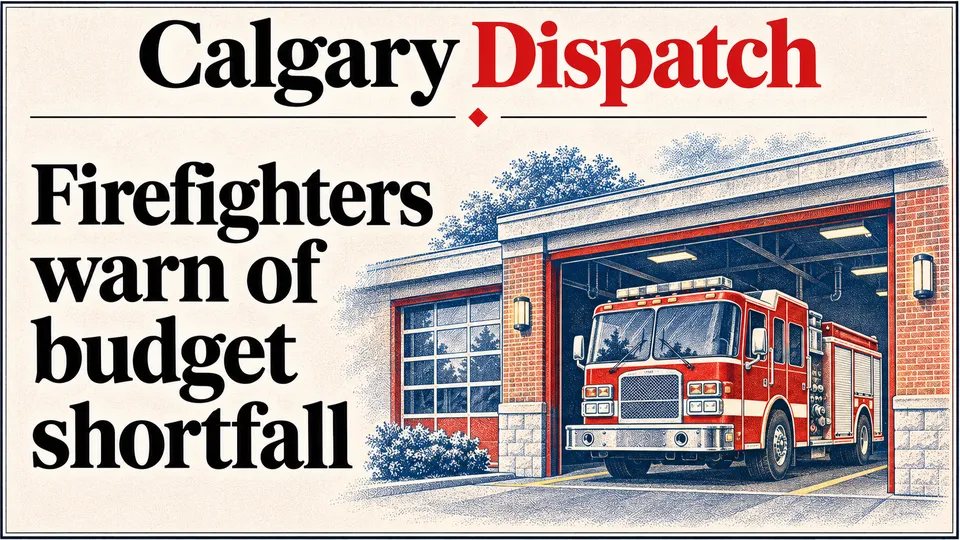
Calgary's firefighters are warning city council against reducing emergency-service investment as elected officials search for ways to limit proposed property-tax increases. Calgary Firefighters Association president Jamie Blayney told CityNews Calgary on Tuesday, November 24, that a funding allocation had declined from approximately $68 million to $43 million.
He estimated that the difference represented seven front-line emergency vehicles, adding a new public-safety concern to the ongoing municipal budget debate. The association's assessment should not be interpreted as confirmation that Calgary is removing seven existing fire trucks from service. It describes the organization's estimate of the equipment consequences associated with a funding shortfall.
The precise budget allocation referenced by the association and its relationship to planned fleet expansion and replacement require further clarification from municipal officials. Ward 6 Coun. John Pantazopoulos said councillors are examining departmental spending to identify potential reductions without compromising essential services or cancelling important construction projects.
Mayor Jeromy Farkas has also indicated that some increase in property taxation will likely be necessary. Nearly 300 people had registered to participate in the budget hearing by Tuesday evening, according to CityNews reporting.
The proposed 2027–2030 budget includes $102 million for new fire and emergency response stations, including facilities serving downtown and the Keystone area. It also contains significant spending proposals for police facilities, transportation infrastructure and municipal recreation projects. Funding for buildings, vehicles and front-line staffing must be assessed separately because approving a new station does not automatically establish that enough equipment and personnel will be available to operate it.
Calgary's expanding suburban communities create particular challenges for emergency-service planning. New residential development can require additional stations, equipment and personnel to maintain response coverage across a larger geographic area. The financial consequences depend on how growth-related infrastructure is financed, which costs are recovered through development charges and which must be covered through municipal taxation.
Council's final decisions will determine whether emergency-service capacity expands at the pace administration considers necessary. The current budget proposal calls for a 15-per-cent property-tax revenue increase in 2027, but council has not approved that amount. Numerous potential amendments remain under consideration. The firefighters' warning provides a concrete issue for councillors to examine as they assess possible savings: whether changes to equipment funding would affect future deployment capacity, vehicle replacement schedules or emergency response standards.
Those consequences should be established through departmental analysis before the final spending plan is adopted.
Sources: Calgary 2027 budget · CityNews hearing coverage