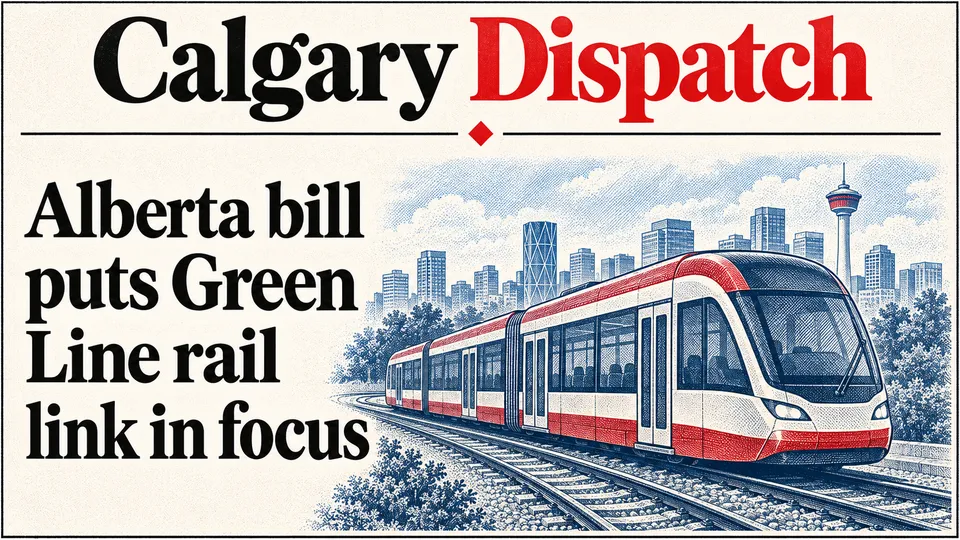
Alberta's proposed transportation legislation could give the provincial government broad authority to direct changes to Calgary's Green Line LRT project while leaving the municipality responsible for the costs of complying. Bill 43, introduced November 19, would require municipalities to submit detailed urban rail transit network plans to the province for approval and allow the transportation minister to order changes to existing or proposed lines. The scope of that authority has become a new point of contention between Calgary Mayor Jeromy Farkas and the provincial government, according to reporting published November 21. The bill remains proposed legislation and has not taken effect.
The proposed changes go well beyond the bike-lane provisions that attracted attention when the legislation was introduced. Under amendments to what would become the Urban Rail Transit Act, municipalities would be required to provide information about existing and planned rail routes, station locations, vehicle types, related infrastructure and expansions. The minister could approve those plans, direct changes before approval or order modifications after a plan had already been approved. The legislation specifically defines proposed infrastructure to include lines that are planned or under construction, bringing projects such as the Green Line potentially within its scope.
Additional provisions would require municipalities to notify the minister when considering changes to rail planning, design, project delivery, asset management or passenger-safety infrastructure. The minister could prevent a proposed change from proceeding or direct the municipality to modify it. Section 20 would assign the costs of complying with ministerial directions to the affected municipality. The bill does not establish a specific new financial contribution from Alberta to cover provincially directed changes. These provisions appear in the introduced legislation and remain subject to amendment through the legislative process.
The implications are significant for Calgary's Green Line, which has already experienced years of disagreements over its downtown alignment, scope and financing. Calgary council approved a surface alignment along 10 Avenue South on September 22, connecting the southeast segment to a planned downtown station near 2 Street S.W. Construction is underway on the southeast portion from Shepard toward the Event Centre area, while detailed planning continues for the downtown connection. The province previously opposed an underground alignment because of cost concerns. New powers to direct design decisions could alter the balance of control over a project that already depends on financial contributions from multiple governments.
Farkas has questioned whether expanded provincial decision-making authority should come without a corresponding increase in financial responsibility. The mayor has previously argued that governments seeking greater influence over major infrastructure projects should contribute accordingly. Provincial officials have presented the legislation as a way to strengthen coordination and oversight of transit projects. These positions reflect a genuine disagreement over governance and project risk, although neither side has established that Bill 43 will result in a specific new Green Line alignment, construction delay or additional cost.
The dispute also overlaps with a separate controversy about the bill's bike-lane provisions. Premier Danielle Smith said Saturday that amendments would be introduced following concerns about the allocation of bike-lane removal expenses. However, that announcement should not be interpreted as confirmation that the government will also revise the rail-transit provisions. The two sets of powers are distinct. As written, Bill 43 would allow substantial provincial involvement in urban rail planning and leave the financial consequences of ministerial directions with municipalities. The immediate test will be whether the government introduces amendments addressing those powers before the bill advances through the legislature.