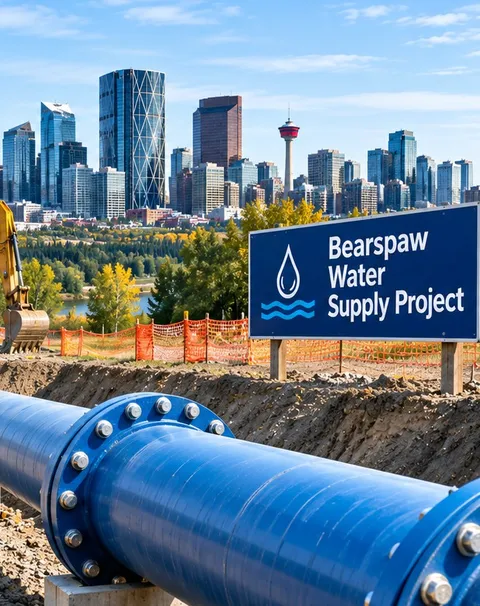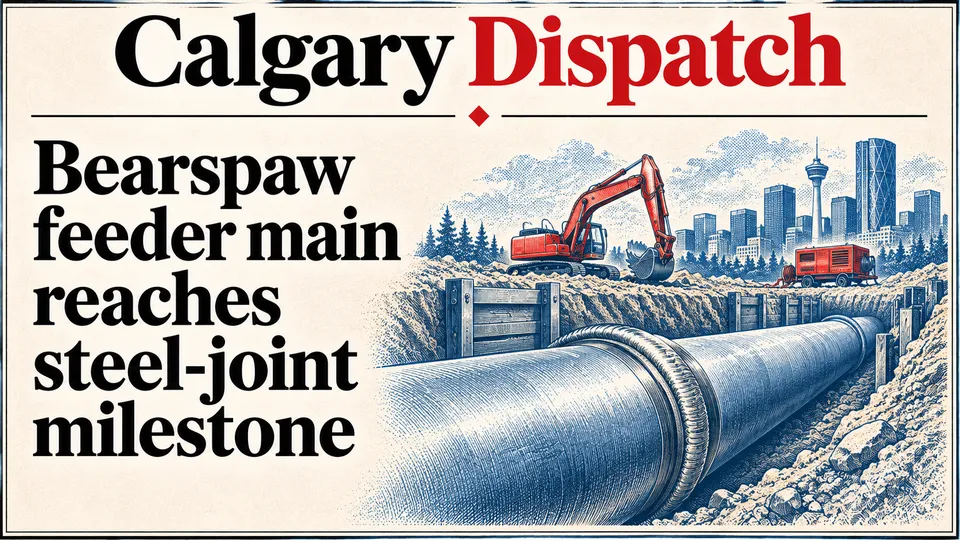
Calgary and neighbouring communities have remained below the city's critical water-consumption threshold for 16 consecutive days as construction continues on the new Bearspaw South Feeder Main. In a November 20 update, the city reported that water demand on Thursday was 480 million litres, two million litres below its forecast and 20 million litres beneath the 500-million-litre level it has identified as a risk threshold during the connection work. The newest construction milestone involves a major steel connection near 33 Avenue and 89 Street N.W.
Crews have placed and connected the new steel joint linking the replacement feeder main to the existing pipeline leading toward the Bearspaw Water Treatment Plant. Welding and related connection work are continuing around the clock at the location, according to the city. Work is also advancing at two other primary connection sites.
Near the Shaganappi Pump Station, pipe installation and welding continue, while excavation near 33 Avenue and 83 Street N.W. has been expanded to accommodate additional work on an existing pipe. Calgary officials say the recent snow and colder weather are not currently expected to delay the project's schedule. Separately, additional pipe repairs are progressing along Parkdale Boulevard between the Shaganappi and Memorial pump stations.
The city expected pipe installation at those repair sites to be completed Friday, with backfilling continuing through the weekend. That forecast should not be confused with confirmation that the entire feeder-main connection project has been completed. The importance of reducing daily demand remains unchanged.
During the connection work, Calgary has less flexibility in its drinking-water supply system, making the 500-million-litre threshold important to preserving capacity for everyday needs and emergencies such as firefighting. A daily total below that threshold indicates demand remains within the city's preferred operating range, not that the system has returned to normal or that restrictions can be lifted. The next decisive milestone will be completion and testing of the connection work, followed by the city's decision on when the new infrastructure can safely return to service.
For residents and businesses, the immediate direction remains to comply with Stage 4 outdoor water restrictions and continue reducing discretionary consumption until the city formally announces a change.