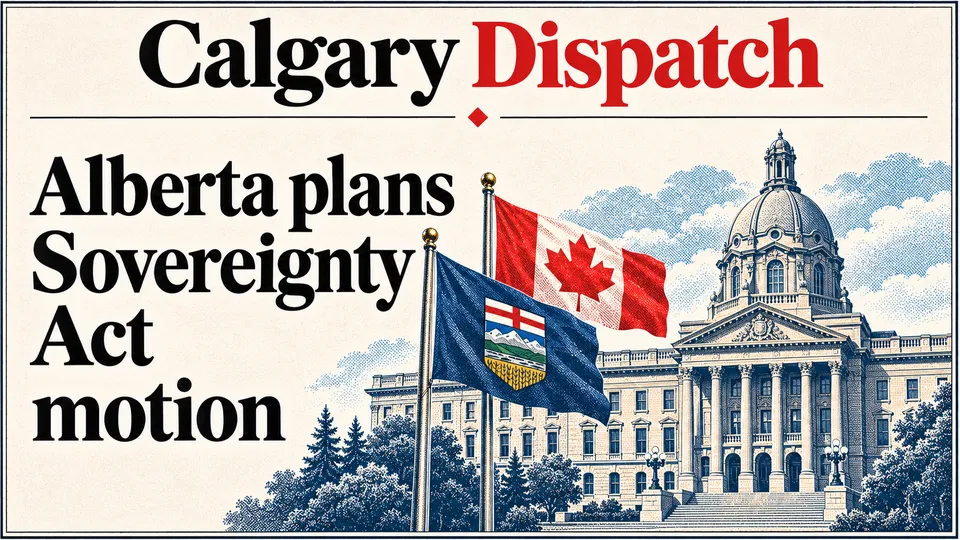
Alberta is preparing another use of its Alberta Sovereignty within a United Canada Act, this time in response to federal legislation strengthening Canada's hate crime and hate propaganda provisions. Premier Danielle Smith and Justice Minister Mickey Amery announced Tuesday, November 24, that the government will introduce a motion calling for provincial action to protect lawful political and religious expression. The announcement centres on Ottawa's decision to remove a longstanding Criminal Code defence involving religious opinions expressed in good faith.
The federal legislation, originally introduced as Bill C-9 and subsequently named the Combatting Hate Act, received royal assent on June 18, 2026. Its provisions came into force July 18. The legislation established additional offences addressing hate-motivated conduct and interference with access to religious and community facilities, alongside changes to existing hate propaganda provisions. It also introduced a statutory definition of hatred and removed the former religious-opinion defence from certain offences.
Alberta's government argues that removing the defence could discourage individuals from expressing legitimate religious beliefs because of uncertainty about how the amended law will be interpreted. Its proposed motion would ask cabinet to consider lawful measures protecting expression, informing Albertans of their rights and maintaining enforcement against genuinely criminal conduct. The province says it is not seeking to prevent the prosecution of violence or unlawful hate propaganda.
The federal Department of Justice has presented a different interpretation of the legislation's consequences. Ottawa maintains that ordinary religious instruction, peaceful political advocacy and the reading or discussion of religious texts remain lawful. Federal officials point to the Canadian Charter of Rights and Freedoms and the high evidentiary threshold associated with hate propaganda offences. The removal of a specific statutory defence does not itself eliminate constitutional protections for religious expression, although the application of those protections may ultimately be examined in court.
The proposed provincial motion follows earlier directions issued to Alberta law enforcement and prosecutors. The provincial government says it provided guidance during August and September emphasizing that controversial or unpopular opinions alone should not lead to criminal charges. Alberta's attorney general also retains a consent role in certain hate-related prosecutions. That prosecutorial authority is distinct from the federal government's constitutional jurisdiction over criminal law.
Tuesday's announcement does not repeal federal legislation or establish an exemption from the Criminal Code for Alberta residents. Under Alberta's Sovereignty Act framework, the legislature must first consider the proposed resolution, after which cabinet may examine legally available responses. The practical consequences will depend on the motion's final wording, any subsequent provincial measures and possible judicial review. The dispute adds another constitutional dimension to Alberta's relationship with Ottawa while leaving the existing federal law in force.
Sources: Government of Alberta: Sovereignty Act motion announcement · Parliament of Canada: Bill C-9 · Justice Canada: Criminal Code reforms