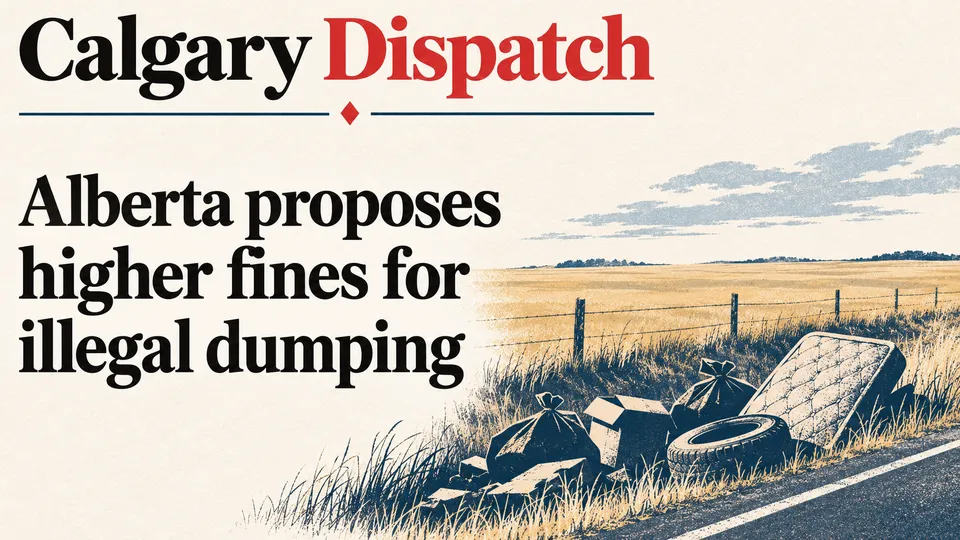
Alberta is proposing substantially larger fines for illegal dumping and serious environmental contamination as part of a wide-ranging bill introduced Wednesday, November 18. Bill 42 would amend the Environmental Protection and Enhancement Act and create stiffer consequences for individuals and corporations that improperly dispose of waste or cause serious pollution. The measures remain proposals and would require legislative approval.
Under the government’s outline, individuals convicted of illegal dumping would face fines ranging from $10,000 to $100,000, while corporate fines would range from $100,000 to $1 million. The proposal would also provide for jail sentences ranging from 30 days to six months. Whether a specific defendant would face imprisonment or a particular fine would depend on the enacted law, the charge and the court’s findings; introducing the bill does not mean these penalties already apply.
A separate set of amendments would raise the maximum corporate penalty for knowingly causing serious environmental contamination from $1 million to $6 million. The proposed maximum for serious contamination that was not knowingly caused would rise from $500,000 to $3 million. The government says the higher penalties would apply across industries and would be additional to existing duties to clean up and remediate contaminated sites.
The provisions appear in the same legislation as proposed restrictions on large data centres and changes to energy development and well-cleanup funding. The province says the enforcement amendments are intended to discourage illegal dumping, protect public land and private property, and strengthen accountability as industrial development expands. Those objectives will need to be measured against actual investigations, prosecutions and completed remediation work rather than the stated maximum fines alone.
For Calgary and nearby municipalities, the immediate reporting opportunity is to identify how often illegal dumping leads to provincial charges, what fines courts typically impose under current law, and whether enforcement agencies have the staff and resources to investigate violations. Higher statutory penalties can increase deterrence, but they do not by themselves demonstrate that more offenders will be found or that polluted sites will be restored more quickly.