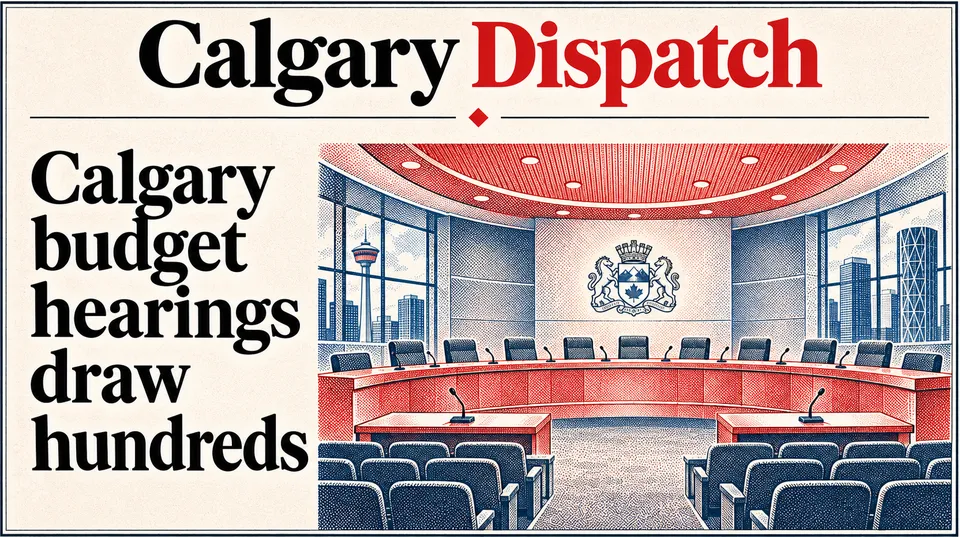
Calgary's proposed four-year budget is facing substantial public scrutiny, with more than 260 people registered to address city council as hearings began Monday, November 23. City officials also confirmed that nearly 70 potential amendments had already been drafted, with additional proposals expected throughout the deliberations. The volume of public participation and proposed changes suggests council faces considerable work before settling on a final spending plan and determining how much additional revenue Calgary households will be expected to provide.
City administration's proposed budget calls for property-tax increases of 15 per cent in 2027, 10 per cent in 2028, 7.7 per cent in 2029 and six per cent in 2030. Applied consecutively, those percentages would amount to a cumulative increase of approximately 44.4 per cent in the applicable tax measure over four years. Individual household tax bills would vary according to property assessments, tax distribution and council's final decisions. The city estimates that the typical residential property would face approximately $53 in additional monthly municipal property taxes and utility charges during the first year alone.
Among the proposed expenditures are approximately $6 billion in annual operating spending for 2027 and a $21-billion four-year capital program. Major infrastructure commitments include water-system improvements, road rehabilitation and recreational facilities. Calgary Transit and Calgary Police Service are also seeking additional operating resources. Council must distinguish between expenditures financed through annual taxation, utility revenue, borrowing and contributions from other governments when considering potential reductions.
Monday's public submissions demonstrated the competing demands facing elected officials. Some residents urged council to prioritize affordability and identify operating efficiencies, while community organizations called for continued investment in housing, mental-health support and programs serving vulnerable residents. The Calgary Alliance for the Common Good raised concerns about whether the proposed budget provides sufficient resources to meet the city's affordable-housing objectives.
Its assessment represents an advocacy organization's interpretation of the spending plan and should be evaluated against the city's detailed housing allocations. Ward 1 Coun. Kim Tyers has proposed examining what a property-tax freeze would require, while Mayor Jeromy Farkas has warned that maintaining essential services and infrastructure will likely require some additional revenue. The disagreement highlights a broader issue: whether council should establish an acceptable tax increase first and adjust spending accordingly, or determine which services it considers necessary before calculating the associated revenue requirements.
The city's published schedule anticipates final budget approval in December. The nearly 70 amendments identified Monday are proposals under development, not approved changes to the financial plan. For Calgary residents, the important developments over the coming days will be the actual wording of amendments, recorded council votes, changes to service levels and revised household cost estimates. Until those decisions are made, the current tax and utility increases remain proposed rather than final.
Sources: City of Calgary proposed budget