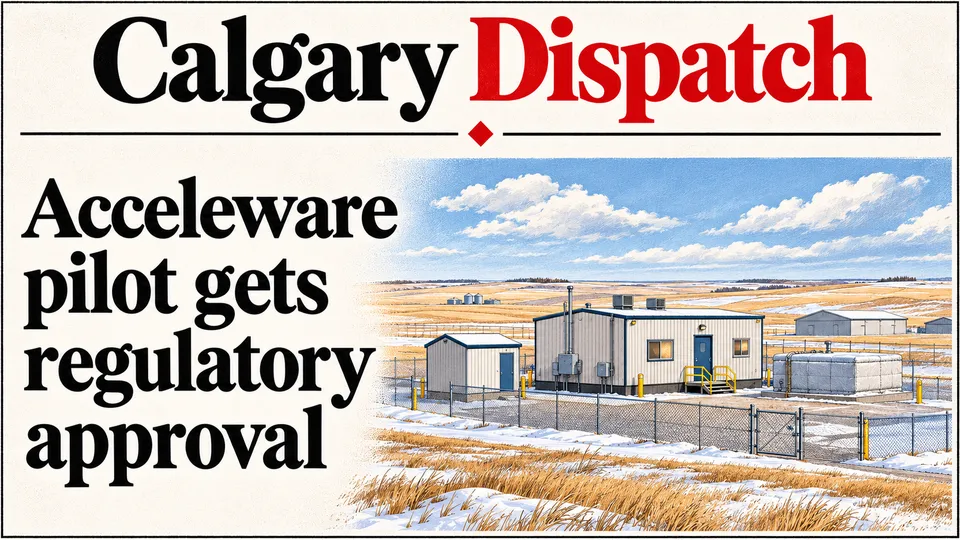
Calgary-based energy technology company Acceleware has announced a regulatory milestone in its efforts to develop an alternative method of recovering heavy oil using electromagnetic heating. The company said Monday, November 23, that Saskatchewan's Ministry of Energy and Resources had granted ministerial approval for its Edam Lloydminster Radio Frequency Heating Pilot Project. The proposed development is intended to test Acceleware's RF XL 2.0 technology in the Lloydminster geological zone of Saskatchewan's Mannville formation. According to the company's announcement, the approval covers a pilot near Edam involving a horizontal heating installation and a separate horizontal oil-production well. Acceleware identified the regulatory decision as Minister's Order MRO 205/26, issued under Saskatchewan's Oil and Gas Conservation Act. The company says planning work has advanced and the technology is ready for manufacturing and deployment. The underlying ministerial order was not independently retrieved for this report, and Acceleware's announcement remains the source for the approval details. Radio-frequency heating offers a different approach to thermal oil recovery.
Conventional thermal methods frequently use steam to heat underground oil deposits, reducing the oil's viscosity and allowing it to move more readily toward production wells. Electrically powered heating seeks to deliver energy underground without depending on the same steam-generation and injection process. If successfully commercialized, the approach could have implications for water consumption, production costs and emissions. Those potential advantages depend on actual field performance and the source and cost of electricity. Acceleware estimates that completing the pilot will cost between $5 million and $6 million, including contingency allowances. The company has finalized an agreement with the Clean Resource Innovation Network for up to $2 million in grant support. It also reports conditional eligibility for approximately $2.5 million in transferable Saskatchewan royalty credits associated with qualifying future projects. The royalty credits should not be treated as equivalent to immediately available construction financing. Acceleware says additional funding is still being pursued.
The development has broader relevance for Calgary's energy technology sector because it addresses a central challenge facing heavy-oil production: reducing the energy and environmental costs of extracting difficult-to-produce resources while remaining commercially competitive. A successful field demonstration could attract interest from producers evaluating alternative thermal technologies. However, regulatory approval for a pilot does not establish that the process will achieve commercial production rates, competitive operating costs or lower lifecycle emissions. Acceleware expects to obtain remaining well and facility licences before moving into construction and drilling. The key measures of success will include oil recovery rates, electricity consumption per barrel, equipment reliability, capital requirements and operating costs under field conditions. For Alberta's energy industry, those results will ultimately be more important than the approval itself. The company has moved closer to deploying its technology, but commercial viability remains to be demonstrated.