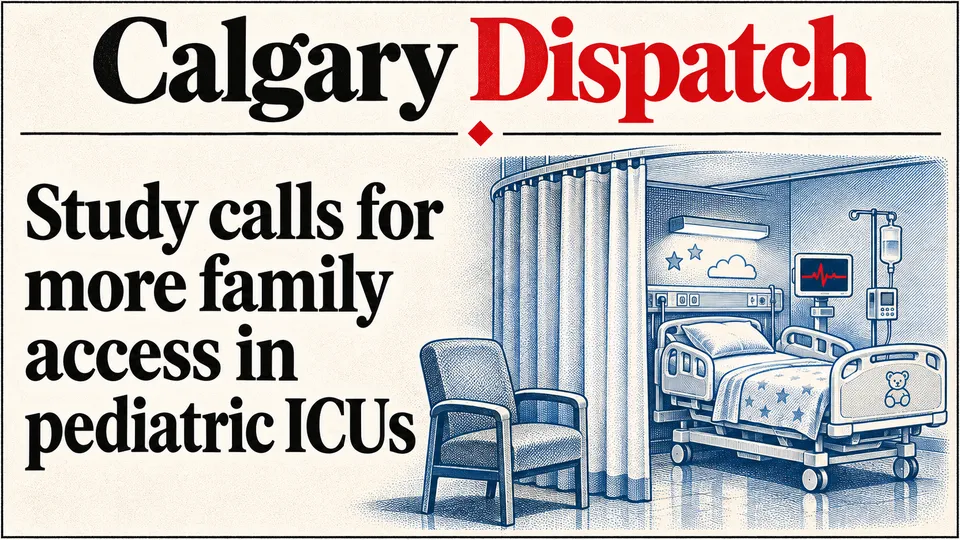
Researchers led in part by the University of Calgary are recommending significant changes to how hospitals manage family access to children receiving intensive care. A study published November 12 in JAMA Network Open sets out 10 priorities and 44 recommendations for pediatric intensive care unit visiting policies, emphasizing continuous access to parents or designated caregivers and greater participation by families in decisions about hospital rules. The findings were highlighted in Calgary reporting on November 20, bringing attention to how restrictions introduced during health emergencies can affect children and their families.
The research was led by a team including University of Calgary nursing professor Laurie Lee and Dalhousie University researcher Jennifer Foster. It drew on a structured consultation process involving 43 participants from across Canada, including former pediatric intensive care patients, family members, clinicians and health-care policymakers. Using a modified Delphi method, which gathers and refines expert and stakeholder agreement over successive rounds, the research team developed recommendations intended to guide hospitals during routine operations and emergencies. The process produced a policy framework rather than a clinical trial measuring the direct effect of visiting hours on recovery.
One of the central recommendations is that children should have unrestricted, around-the-clock access to at least two designated parents or caregivers. The study also recommends that families participate in decisions about sibling visits and that children who are capable of expressing preferences be included in decisions affecting their care. It calls for visiting policies to acknowledge diverse family structures and relationships rather than relying on inflexible definitions of who counts as a parent or support person.
The recommendations address infection prevention and hospital capacity as well. Researchers acknowledge that exceptional circumstances, including infectious-disease outbreaks, can require adjustments to family access. However, they argue that restrictions should be transparent, proportionate and subject to clear exception procedures. The study recommends involving infection-control professionals, families, clinicians and hospital administrators in the development of policies, rather than placing responsibility exclusively with institutional leadership. Families should also receive clear explanations when access is limited.
The findings are relevant to Alberta's pediatric health-care system, including Alberta Children's Hospital in Calgary and the Stollery Children's Hospital in Edmonton. Lee, who has extensive experience in pediatric critical care, told LiveWire Calgary that family presence can support children's emotional security and help care teams understand patient needs. The study itself, however, did not establish that adopting the recommendations would necessarily shorten hospital stays or produce a particular reduction in health-care costs. Those outcomes would require additional research and implementation evaluation.
The next stage is determining whether hospitals adopt the framework and how any new policies would balance family access with infection control, clinical safety and available space. LiveWire Calgary reported that the researchers are expected to present their findings at a Children's Healthcare Canada conference in April 2027. For Calgary families, the most important questions concern current visiting rules, whether caregivers face restrictions during emergencies, how exceptions are handled and whether patients and families have a formal role in policy development. The recommendations offer a model for reform, but their publication does not itself change hospital policy.